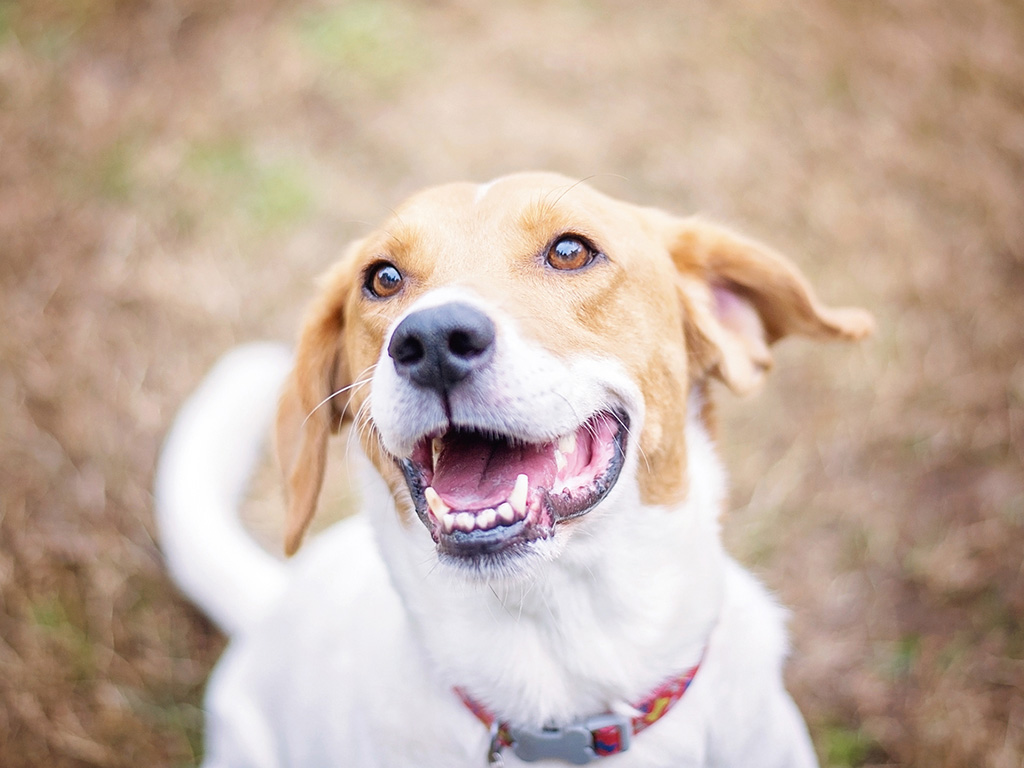
Dental hygiene for dogs and cats is essential for their overall health and well-being. Studies have found that an estimated 80% of dogs over the age of three have gum disease
The mouth is very important to animals as they spend their days not only eating and chewing but also …. grooming, removing insects from their coat and manipulating things. Each tooth has its function, like a piece of machinery, that is a reflection on its heritage as hunters and opportunistic feeders. The mouth has a good blood supply and contains many nerves making dental issues a potential problem. If your pet has a sore mouth you may be unaware as they are unable to tell you about it!
Sometimes there are no signs at all that your pet is suffering from dental problems, but typical signs can include:
- Plaque (a biofilm which contains bacteria) and tartar/calculus (yellow-brown hard mineralised plaque) build-up on teeth
- Reddened tender inflamed gums resulting from tartar build-up which irritates and puts pressure on the gums and which if isn’t removed can build up under the gums causing them to recede from the teeth.
- Receded gums allow additional bacteria to become trapped, eventually leading to loose teeth and painful abscess development which destroys the root of the tooth.
- Bleeding from the mouth / gums.
- Bad breath
- Excessive salivation or drooling
- Altered behaviour such as chewing on one side, discomfort when chewing, possible loss of appetite, weight loss, not grooming.
Periodontal disease is the most common long term tooth and gum problem and is an affliction undermining the teeth and the entire scaffolding of the mouth. This doesn’t develop overnight and may take many months or years, but beneath the surface bacteria invade the peridontal ligament and bone anchoring the teeth. There is a link between oral health and overall health as the bacteria in peridontal disease can enter the bloodstream, travelling to organs such as the heart and kidneys. Should you notice any of the above symptoms, particularly where the gums look affected and there is behaviour change, you should seek veterinary advice. This may be from a qualified Veterinary Nurse at your local practice in the first instance. Some symptoms may, of course, be due to other related or unrelated problems.
Once some of these hard tartar deposits have been formed then they can only be adequately removed by your vet. You can then contribute to maintaining the health of your pet’s teeth and gums by promoting good dental hygiene, with appropriate dietary adjustment including feeding chews and toys that help clean teeth, and if possible, regular brushing and cleaning.
A proactive approach to dental hygiene ensures your dogs teeth and the vital role that they play in your dogs overall health, remain functional.
So how can you keep your pet’s teeth clean and healthy to prevent these problems?
Once some of these hard tartar deposits have been formed then they can only be adequately removed by your Vet. You can then contribute to maintaining the health of your pet’s teeth and gums by promoting good dental hygiene, with appropriate dietary adjustment including feeding chews and toys that help clean teeth, and if possible, regular brushing and cleaning.
Good oral hygiene is not just about preventing plaque and bad breath but it helps prevent other problems such as heart disease. Bacteria can enter the bloodstream through the breakdown of diseased gum tissue or when plaque has been disturbed. If the immune system is not robust enough, bacteria may reach the heart, causing damage to the heart tissues, especially the valves. Having strong teeth and healthy gums also means food will be chewed properly, so aiding digestion and contributing to overall good condition.
It is never too late to help prevent problems by adjusting the diet, adding appropriate chews and toys, and to start brushing your pet’s teeth.
You should ensure that you check the condition of your pet’s teeth on a regular basis. If you are not confident of what to look for, or even about looking into your pet’s mouth, consider calling into the local veterinary practice for a Vet Nurse to check them twice yearly in a young animal and more often in older animals or those prone to problems.
Diet
Your pet’s diet can play a significant role in the amount of tartar build up. You should aim to feed them a species-specific diet – ideally a raw diet (or fresh food) as they are thought to contain natural enzymes that help reduce plaque, and many vets and owners report healthier teeth and gums in dogs fed raw food and raw meaty bones. Chewing also plays a role in cleaning teeth and removing plaque and tartar.
Raw food which contains ground bone acts as a fine, gentle dental abrasive when chewed, helping to remove debris which may have stuck on the teeth. The raw meat also contains naturally occurring enzymes which help protect the gums and teeth. Starchy kibble can stick to the teeth, unlike raw food which doesn’t. Raw or fresh food is not is not laden with carbohydrates and sugars that can promote unhealthy bacterial growth in the mouth.
Raw Meaty Bones - especially promote chewing and naturally clean the gums.
Size appropriate raw bones are a great option. Ensure your dog is supervised to minimise any risk and refrigerate between chewing sessions. NEVER feed cooked bones to your dog as they can splinter and cause serious damage and may cause constipation due to changes in the mineral content. Raw bones, like marrow or knucklebones, rarely cause breakage.
Supplements
There are a range of supplements available with ingredients that support gum health and helping to soften plaque making it easier to be removed by the chewing actibity or brusing. These include:
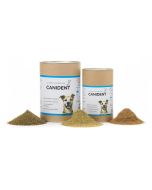
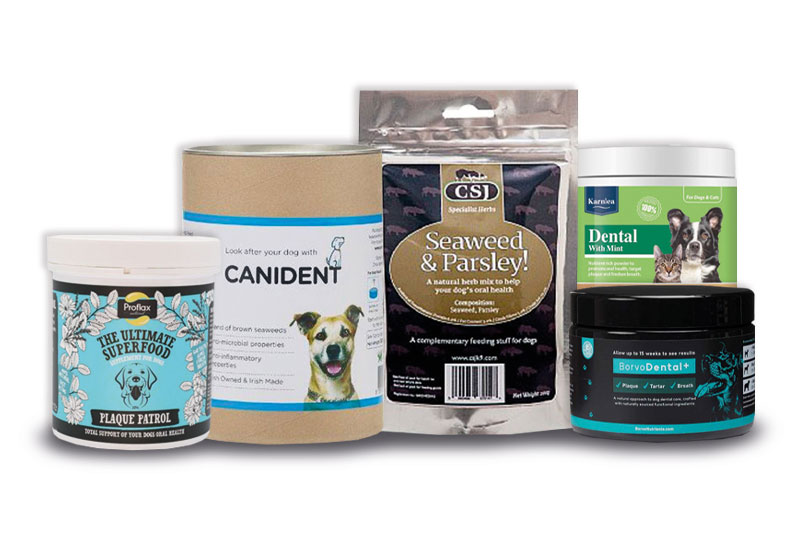
- Canident - a unique blend of Irish brown seaweeds, with the anti-microbial properties of this seaweed blend helping to prevent the build up of plaque and tartar on dogs teeth,
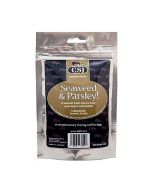
- CSJ Seaweed & Parsley! - a mix of Irish seaweed with parsley to aid your dog's oral health,
- Hedgerow Hounds Dental Hygiene with seaweed, fennel and oregano, a canine dental blend to assist in removing plaque and tartar, improving overall oral health & freshening the breath or
- Proflax Plaque Patrol which has been designed to combat plaque build up, promote healthy gums, keep teeth clean & strong and breath fresh. Formulated with 6 of the best herbal ingredients to support optimal oral health and to help with gingivitis and periodontal conditions including seaweed, calendula, thyme, decaff green tea, turmeric and parsley.
- Borvo Dental Plus - is a unique blend of 80% brown Irish seaweed and 20% European grown microalgae extract, a powerful, synergistic combination for maintaining healthy teeth and gums in dogs, while also providing a range of additional health benefits.
- Karnlea Dental with Mint Topper - blended mix of red, green and brown seaweeds with mint. Each included because of their benefits to the oral microbiome of your pet.
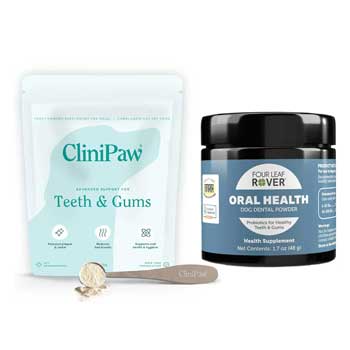
As you may already know, the microbiome is essential for immune function, inflammation control, and digestion—but are you also aware that the oral microbiome also has a major impact on your dog’s dental and overall health. That’s why probiotics and prebiotics are becoming a key focus in oral-health research and probiotics are now being added to some dental supplements, including:-.
- Four Leaf Rover Oral Health- supports a healthy mouth microbiome with probiotics, kelp, aloe vera, MCT, chamomile and astaxanthin.
- CliniPaw Teeth & Gums - with calsporin, a probiotic that helps balance oral and gut microbiota. By reducing harmful bacteria, it supports fresher breath and a healthier oral environment, with added seaweed, brewers yeast, yeast extract, parsely leaf, pomegranate extract and green tea.
More about probiotics and Prebiotics and how they can help support your dog's oral health - Probiotics support oral health when given by mouth or applied directly to your dog’s gums—especially when using multiple bacterial strains. Applied topically, they colonize the mouth and help build a healthier biofilm (the sticky layer that forms plaque). Studies show oral probiotics reduce inflammation, decrease harmful bacteria linked to periodontal disease, and even improve bone density. For daily care, give your dog an oral dose and you can also rub powdered probiotic onto the gums. Many owners also notice fresher breath.
Prebiotics - these are soluble fibers with many health benefits. These fibres are a food source that feed the beneficial bacteria in your dog’s gut, helping to maintain your dogs healthy gut flora and supporting immune health. Prebiotics are fermented into short-chain fatty acids (SCFAs), which help fight harmful microbes. In the mouth, prebiotics also block the sugar-to-acid and sugar-to-plaque processes by inhibiting enzymes that turn starch into glucose.
A top tip from Dogs Naturally is to make a Pre-/Probiotic Slurry - To keep these nutrients in your dog’s mouth longer, mix a probiotic with a soluble-fiber source, such as medicinal mushrooms, blended dandelion greens, or a bit of garlic into warm bone broth. Let your dog slurp the slurry to coat the teeth with beneficial bacteria and SCFAs that help fight plaque, inflammation, and periodontal disease.
We sell a great range of probiotics (and prebiotics) and the range can be viewed HERE
Dental Sprays
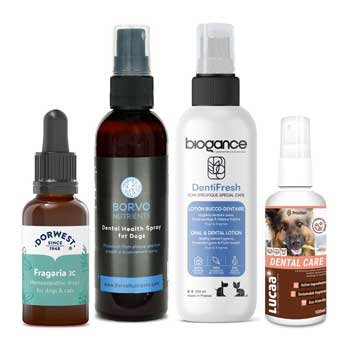
In addition, we also sell sprays to support dental health. These include:
- LUCAA+ Dental Spray a pet probiotic dental care spray to foster better dental health, protecting gum health and reducing plaque, tartar and bad breath. Enriched with beneficial ‘good’ probiotic bacteria, naturally sourced from plants, the helpful probiotics quickly restore healthy microflora balance to the mouth. They clean teeth and gums at a microbial level and inhibit the growth of harmful bacteria.
- Borvo Nutrients have also brought out Dental Health Spray to keep your dog's teeth and gums in tip-top shape with Borvo Nutrients Dental Health Spray 100ml bottle! This easy-to-use spray is designed to tackle plaque and bad breath while promoting healthy teeth and gums. Simply spray directly onto your dog's teeth and gums for optimal results.
- Biogance Dentifresh Spray - is a natural and effective solution for healthy dental hygiene, fresh breath and to protect the gums, as the natural complex of enzymes and Fluor helps to stop tartar build-up.
- Dorwest Fragaria 3c are homeopathic drops to soften and aid the removal of tartar on encrusted teeth and to slow down and prevent the formation of new plaque deposits. Simple add to food or directly to mouth.
Antioxidants
Recent studies have linked chronic oxidative stress (cell damage caused by excess free radicals) to oral bacteria and periodontal disease. Because antioxidants help balance free radicals, they play a key role in your dog’s dental health. You can boost antioxidant intake with foods like berries and leafy greens, or with targeted supplements. Four Leaf Rover's Red Rover is a blend of organic* apple skins and berries to supply your dog with critical fibre, antioxidants and phytonutrients.
CoQ10: Low CoQ10 levels are associated with periodontal disease in humans, and both oral and topical supplementation have shown benefits. Dogs can benefit as well. CoQ10 is naturally found in fatty fish and organ meats. Check out our supplements that contain CoQ10 HERE.
Fatty Acids
Fatty acid supplements can also help reduce periodontal inflammation. Omega-3s support oral and gum health while also benefiting your dog’s joints, heart, kidneys, and brain. We sell a range of omega-fatty acids which you will find HERE.
Brushing Your Pet's Teeth - active plaque removal
An ideal way to ensure that tartar doesn’t form on your dog or cat’s teeth is to carry out regular brushing, ideally once a day. It is best if you start from an early so it becomes part of their normal daily routine.
Ensure your pet is relaxed, for example after a walk. Start off slowly at the beginning to build up trust and don’t force anything; start with only brushing some of their teeth and use your index finger rather than a toothbrush. You can dip your finger into something that your pet likes, for example bone broth, coconut oil or pet toothpaste.
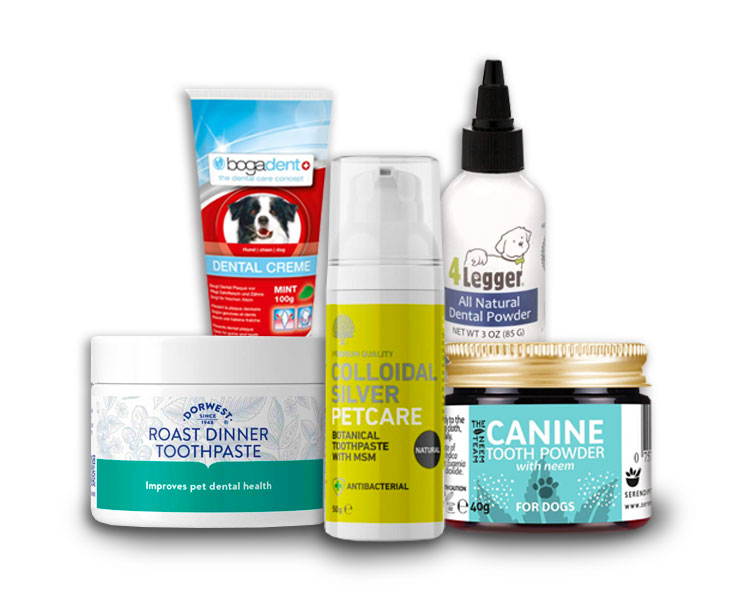
Once your dog or cat is comfortable with this try using something on your finger such as a micro-fibre anti-plaque finger for dogs (also available for cats and puppies) to make this process easier and more effective. Start by gently rubbing the top front teeth and work your way to the front of the back teeth. Repeat the process for the bottom teeth. The tongue and saliva help keep the inside of the teeth clean. Please note that many pets will not tolerate the intrusion of a brush or even a finger brush.
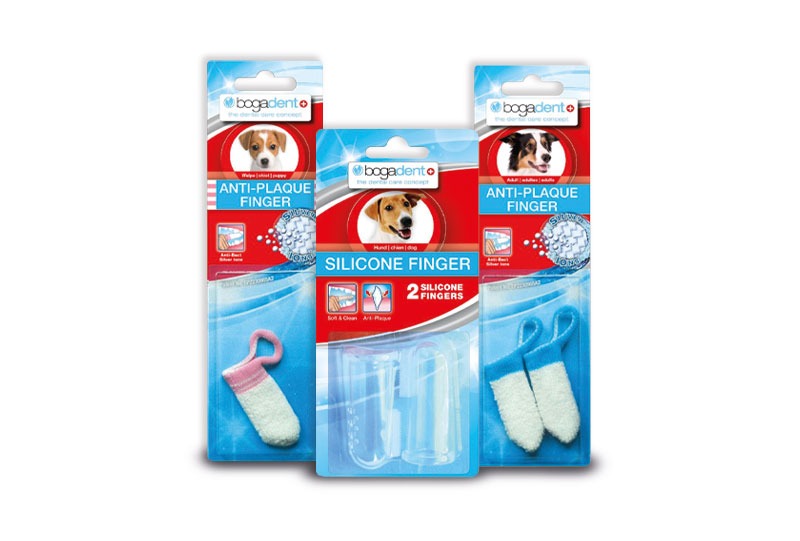
Keep sessions short and offer lots of praise and reward! Apply different pressures to the gums to see how your pet reacts. Then when your dog or cat is comfortable you can start to add a natural, pet toothpaste However we recommend to initially let them lick this off your finger until they get used to the flavour.
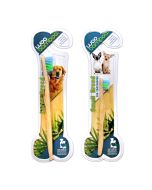
Finally, when you feel they are ready, progress to a finger brush and ultimately to using a soft, pet designed toothbrush, which is the correct size for their mouth. Clean in a circular motion focusing where the teeth and gums meet. Dip the brush in water as you brush to help rinse the plaque away.
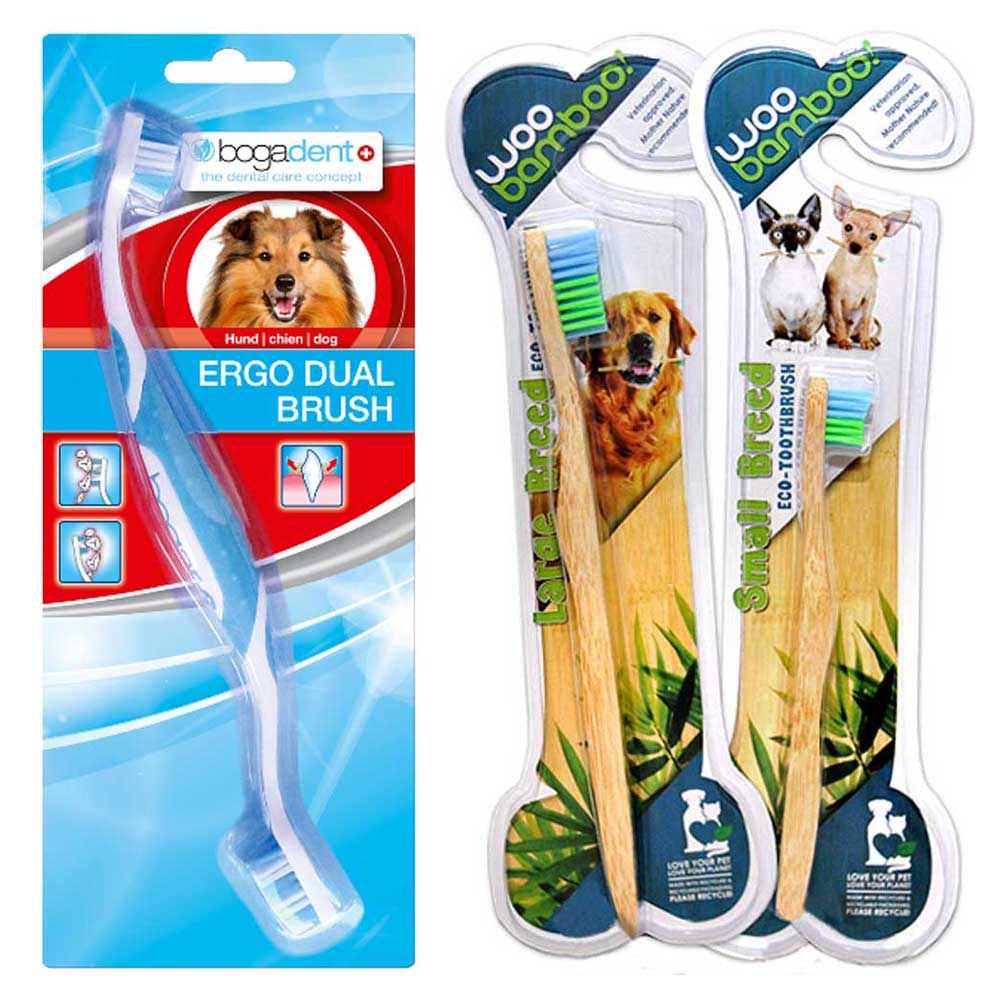
NEVER use human toothpaste as it contains fluoride and sometimes xylitol which are both toxic to dogs and cats.
If brushing is not tolerated by your pet, then a good quality pet Toothpaste which can be smeared onto the gums or onto a treat after the meal, or even squeezed on top of the food or mixed with the food, especially dry food, will spread around the mouth and have some cleaning action, rather than nothing. Some treats are designed to be fed after meals for this purpose.
When looking for dental products for your pets make sure they only contain natural ingredients, such as neem oil, peppermint oil, rosemary oil and sage oil with their naturally antiseptic properties.
If you are interested, view our pet dental range.
Chew Toys
In nature there are a range of tools to help maintain the health of your dog's teeth - including natural chews, turkey and duck necks for example. Not only is chewing enjoyable for your dog but essential for good dental hygiene as they mimic the practices of wild canines as they catch their prey and they naturally clean their teeth through the tearing of meat off the bones of their prey and the gnawing action.
Chewing is very satisfying for dogs as it provides mental stimulation, may help to reduce anxiety as endorphins are released when chewing. Plus chewing offers a workout!
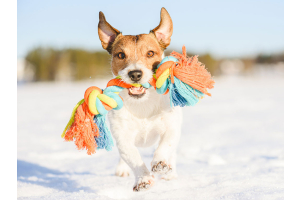
Chew toys are not just for fun but also great for brushing teeth, as every time your dog chews they are brushing their teeth. However, look out for non-toxic “chew” toys to avoid your dog ingesting toxins and chemicals. Premium Antlers , Easy Antlers, Fallow Antlers, Olive Wood Chews, Buffalo Horns and Chew Roots can also be another good option as the dense texture allows dogs to gnaw and chew which helps to scrape away the plaque and tartar as well as promoting jaw strength and keeping gums stimulated. These chews are all-natural, so don't contain any artificial additives and don not splinter. Also playing with your dog with rope chews acts like dental flossing.
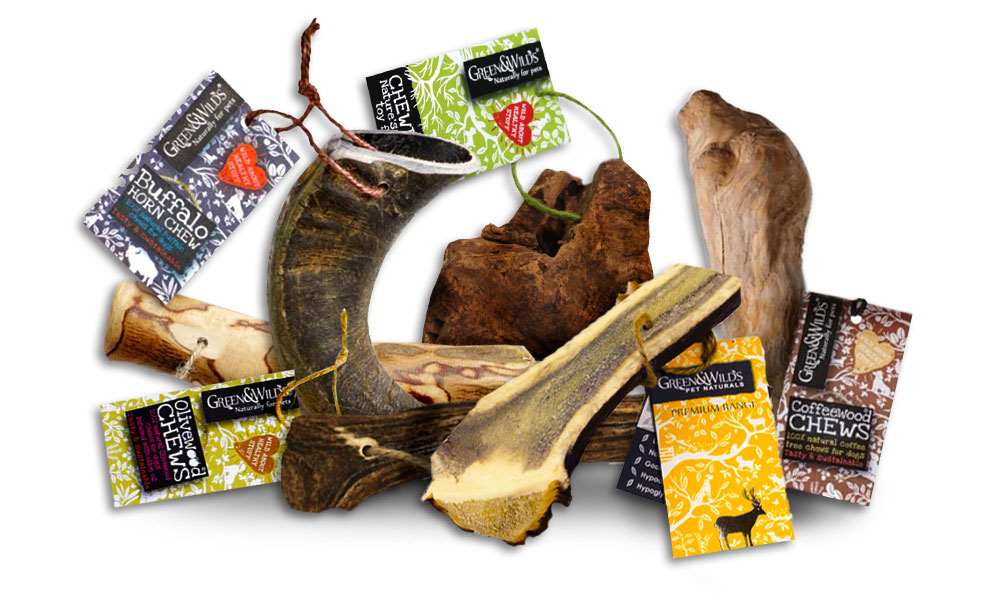
Another good effect from chewing, both toys and especially large bones, is the strengthening of neck, back and core body muscles, also the wearing down of dewclaws in particular which are often used to hold onto the items.
Finally make sure you select the right size of chew for your dog and keep an eye on your dog's chewing as even natural options can pose risks. For example if your dog has a tendancy to gobble or chew things quickly, then certain chews may not be appropriate.
This is a great article by Dr Karen Becker on bones and chews for dogs. Read here.
Older pets and those with a history of liver, pancreatic or digestive upsets should not be given products with a high fat content, (in fact, best to be fat-free for pancreas problems) and also avoid any cereal and colouring additives which some products, especially treats, may contain. Supplements with seaweed extract such as Canident or CSJ Seaweed & Parsley may help soften plaque which can then be more easily removed by the chewing activity or brushing.
Dental Chew Sticks
Chew sticks can also be a great way of cleaning your pets teeth. We sell a great range of natural chew sticks to freshen your pets breath as well as containing natural abrasives to clean teeth and maintain healthy gums. These tasty treats are perfect for fussy dogs who do not like having their teeth cleaned on a regular basis and can also be used as a training reward or snack. Gizzls Dental Dazzle are a functional treat - a tasty biscuit with added ingredients including seaweed, peppermint, astaxanthin, cinnamon extract and coconut oil to help with doggy breath and to help naturally remove plaque.
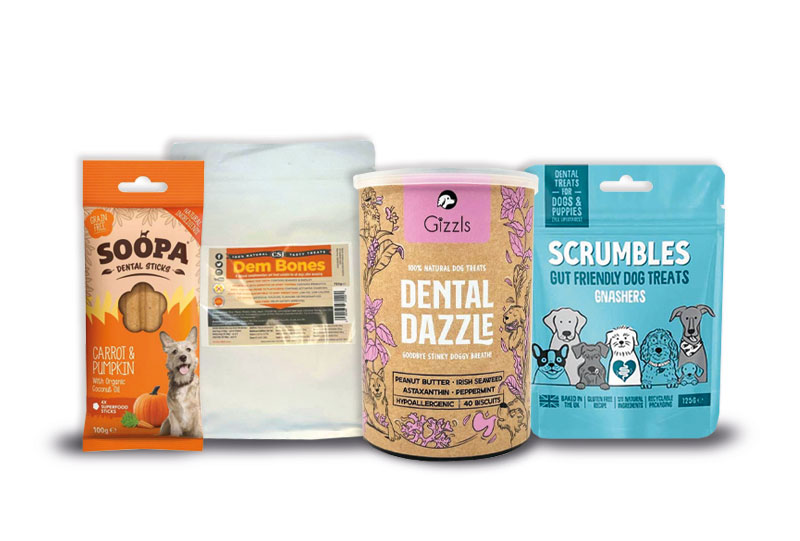
In addition, have a look at our range of natural chews that we sell, such as bully sticks (pizzles), tendons, tails, chicken necks and various ear chews (cow, pig, rabbit) which encourage chewing so their naturally abrasive texture and fibrous structure encouraging the mechanical removal of plaque as the dogs chew and tear through the sinews and cartilage.
Sources
Dr Karen Becker - Don’t Dismiss These 5 Signs of Pain from Your Pet
Dr Pitcarn’s Complete Guide to Natural Health for Dogs and Cats.